

This is my god, the earth
The land beneath my feet
Give me pain that I may see the worth of such...
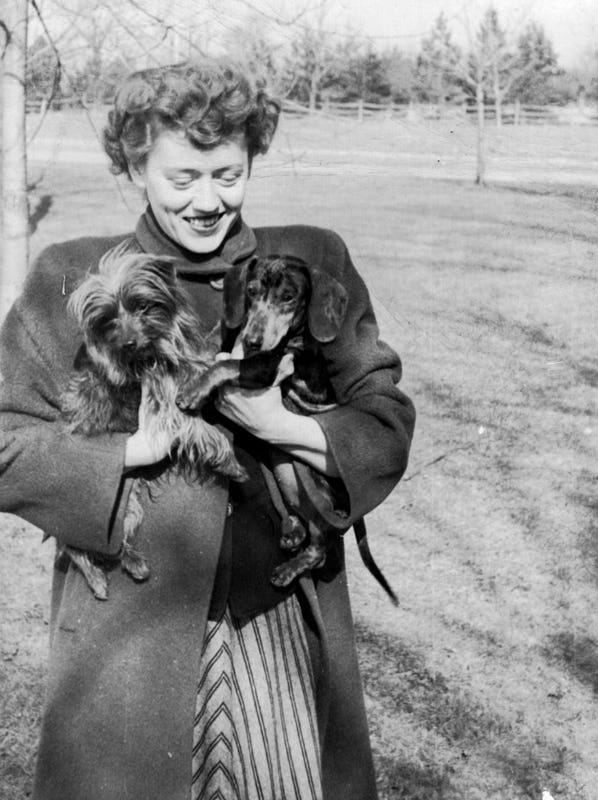
And so my mother’s poem “Pagan Hymn” begins, written in 1947 by the woman who instilled in me a lifelong reverence for everything wild. In 1963, the era of Rachel Carson just unfolding, my mother was prescient enough to send me to Teton Valley Mountain Ranch in Jackson Hole. In the midst of the grand, snow-capped Teton Mountains, an indelible conviction was born in me to promote and preserve wilderness in any way I could.
That was long before annual economic symposiums, hyperbolic powder skiis, mansions disfiguring mountainsides and millionaires playing cowboy in $150 calico shirts. I had ridden that range in sight of herds of elk, deer and antelope, bleached antlers shed and abandoned in every nook and cranny of the prairie, the image of it still seared in my mind after decades. For an afternoon’s ride through juniper- and cottonwood-valleys we didn’t even carry canteens for water. We simply dismounted and drank from any free-flowing stream we happened by.
At thirteen I never imagined it would be any different, or how it could devolve so far in fifty-six short years.
Today we cannot drink the water from the surface of our lands. Our epoch is one of crippled riparian systems as critical to life as ever. The natural systems I was privileged to experience the last relatively pure incarnation of, are increasingly compromised by human impact and lax government oversight. According to the University of Arizona, in New Mexico and Arizona up to an estimated 90% of riparian forested habitat, uncontaminated for millenia, has been lost in the modern period due to human impact. Seventy percent of threatened and endangered vertebrates in Arizona depend on riparian habitat (Johnson, 1989). Only two percent of all streams and rivers in the United States have high water quality (Benke, 2000).
America has the wealth and ability to combat climate-change, protect our forests and oceans, slow species extinction, curb pollution and resuscitate what fresh water resources we still have left. Will the taxpayers choose Giardia, brain-eating amoebas, flesh-eating bacteria and Red Tides; or will we insist, for our children’s sake, they be able to experience the joys of my clean-water-summers in Jackson Hole.
To conserve, we, as a society, will have to wade through a swamp of conflicting values to better agree on what it is we actually care about. To survive as a species, this dialectic will quickly be forced on us, as time is running short.
Our system facilitates the accumulation of great amounts of wealth, too often without regard for the common good. Free-enterprise encourages hyper-consumption which pollutes and contaminates. Sometimes government itself hammers away at what is most vulnerable, lobbied by special interests, today— facilitated by a president without conscience or character. The Trump administration and its supporters are threatening decency, building incongruous walls, denying climate change and condoning a reckless form of consumer-capitalism, all in the name of more profit for fewer people. Regulations that took decades to think through and implement, and that have made huge differences, are being recklessly set aside.
In 2015, the Economic Policy Institute declared Jackson, Wyoming the “inequality capital of the world,” where on average the one percent makes 142 times the 99 percent. Great wealth hoarded away—much of it undertaxed—some of it amassed thoughtlessly and without conscience; applied effectively, has the muscle to make an immediate difference. A squirrel collects and stores as many nuts as it can. Whatever remains at the end of the long winter languishes and rots.
It will take intuitive government “for the people and by the people” to break the squirrel’s obsession with more than it needs. We must break this cycle of greed skewing our values, wreaking havoc on working families, and preying on resources, wild animals and wild places. We must marshall the positive forces of change through the prism of our values.
We are told great fortunes produce jobs and “trickle down” to working men and women; true to some extent, but what are we paying our people to do and are we paying them a living wage (a related issue). It should not be to produce what many of us now clearly see is often just more useless junk carefully crafted for obsolescence, when there are clear alternatives for building wealth.
The myth of wealth and fame, increasingly out of reach to most of us, compels us like lemmings down a hole. If Donald Trump or Jeffrey Epstein is any indication, more wealth than needed simply does not make any of us happier. If more of us could just see what makes life really meaningful: its unwavering spark; the miraculous ingenuity of evolution; our personal experience of it; the knowledge that when we die it continues unspoiled for those who follow us.
I live in Cochise County, Arizona, where the last free-flowing desert river in the southwest, the San Pedro River, is threatened by unrelenting growth. It lives on by a thread. Development is taxing rivers and aquifers and the health of our wild kingdoms while many see interplanetary travel as the answer.
The distant promise of a replacement planet is a poor excuse for trashing our home. NASA and its promises is hardly a panacea. NASA cannot rescue us from destruction, and NASA is hardly a reason to turn a blind eye to it.
As a society, we must modulate commerce and spend America’s vast wealth first on guaranteeing clean water and air, setting aside wilderness for wildlife, and preserving an intact and sustainable outdoors. If not for us—for the children—and for the future of Mother Earth. There is absolutely no plausible reason not to do it or to brush the issue under the rug in the name of jobs and consumption.
The one-percent must step up to the plate, take responsibility and pay their fair share of taxes. They must repay society for the advantage of being its systemic beneficiary. There is no negotiation—it is simply the right and only way forward.
“Pagan Hymn” © copyright 2019, Tony & Angelica Heath