

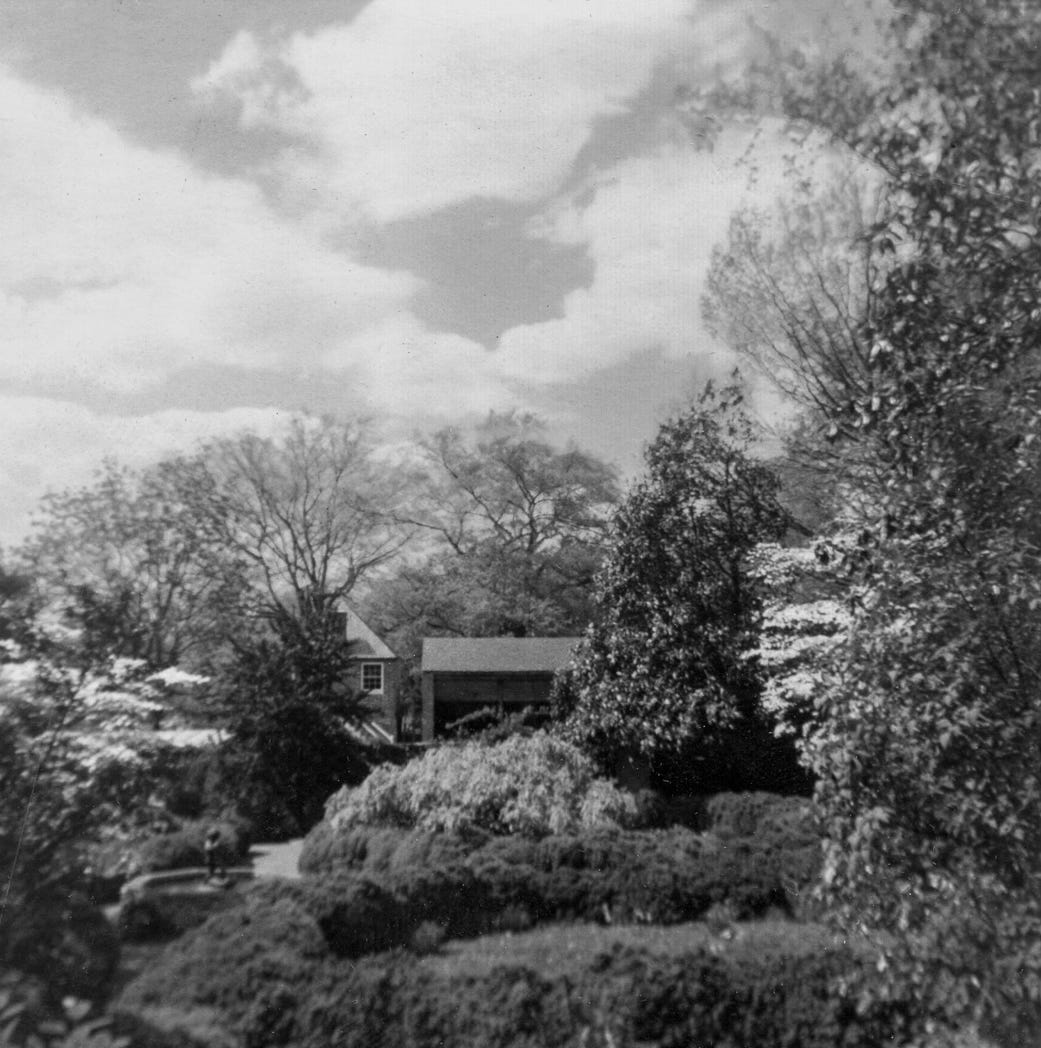
Paradise
If he could just get to sleep, the night would pass quickly without incident. He prayed to be lulled to sleep by the country and doo-op from his transistor radio, the best ghostbuster of all. The radio blotted out the sounds of the dead. He didn’t use his transistor radio when Ally was with him usually, but their first night there had been an exception, and she was so tired she didn’t hear it.
In the very early morning, the comforting sound of Benny’s broom sweeping the porch below the window woke them, reminding them they were back in heaven as they opened their eyes to the exciting image of another day.
Jasper had been more than ready for first light when he woke briefly and noticed the clock read three twenty-six AM in bright phosphorescent lettering. That meant another hour or more until day’s floodlight exploded in brilliance. The scary darkness would be at bay, until soon enough it wasn’t at the end of their second day.
****
Ally rose rested and eager to see her cousins. Birdsong sucked Jasper into the new day, his first in the Arcadia of rolling hills around his grandmother’s estate, with a cousin or two tagging along like pilot fish, feeding off his enthusiasm.
After rising, the children’s first stop would be their grandmother’s room at the bottom of the long carpeted staircase. If it wasn’t too late, she’d be sitting up in bed with her tray eating grapefruit and sipping black coffee. They were always welcome to a segment of pink grapefruit with a sprinkling of cane sugar to cut the bitterness.
Next they’d be off to the kitchen for a breakfast of milk and cereal, a big room filling a one story wing with an immense ceiling that let light in through a series of half-circle dormers. The kitchen had a walk-in pantry with shelves stocked with canned food. Between the kitchen and the dining room was a servery, also with skylights, with baby blue cabinets above an antique countertop holding the crystal glassware, and underneath, more cabinets with drawers for the silver, to store the other accoutrements of formal meals, like china and sterling serving dishes. At the end of the small room was a wide sink for arranging flowers or washing vegetables.
Under the kitchen was a huge basement with its own high ceiling. A fearsome set of stairs led down to a landing and a right turn, before you made it to the basement floor. It was always warm and smelled like heating oil from the furnace. It rivaled the attic in sheer mystery, places the children pretty much stayed clear of until they were older and braver, or palling around with Jasper.
On the west end of the basement, below the stairs, an immense green safe sat on a platform looking down, the likes of which one only saw in banks. Menacingly private, it seemed to stare down at you from its elevated position. How they even got it down there was anybody’s guess. Uncle Stewart apparently had the combination, but over the years Jasper never once saw it opened. It seemed, nobody knew what was inside.
Ninety degrees to the elephantine safe, another short stairwell led up to a door leading into a brick tunnel with a vaulted ceiling. Completely hidden, it snaked furtively down below grade at a gentle angle opening into the garage. Rumor had it, during prohibition Clayton used it to smuggle gin, but others claimed Papa made his own gin in the upstairs bathtubs, so its existence wasn’t without some mystery.
The tunnel was beautifully engineered in brick, a private way to reach the inside of the garage if you needed to get to your automobile in a hurry, or meet someone without being seen leaving the house.
On the east end of the basement was the boiler room with a furnace larger than the green safe. It had an open flame that made Jasper think of Dante’s Inferno. Delores and Clayton had an illustrated set of Alighieri’s works in a chest under the hall stairwell which Jasper was well acquainted with. It also held his grandparent’s collection of 78s, not played in decades, and on top was a statue of a group of cherubs sculpted in marble. On the floor next to the chest was a life-sized leather pig.
Jasper was well acquainted with Dante and his visit to the afterlife of those having led wicked and immoral lives on Earth. He remembered thinking, he hoped Dante included stealing, cheating and conniving in his definition of sin, and worth the punishment of slowing broiling to death naked with others looking on.
****
The old lady rarely cooked for herself. The only thing she made was cheesecake, a recipe she cooked without help from the servants, who came several times a week and always when the family gathered for Sunday Dinner.
Delores’s cheesecake had a thick buttery graham cracker base, its best feature, filled with little balls of watery cottage cheese and presumably some sugar. Jasper couldn’t imagine who, besides his grandmother, made it or enjoyed the recipe. Just thinking about it made him smart with the dread of it, practically a psychosis he disliked cottage cheese so much, preferring cream cheese, which Delores considered too fattening.
Sometimes, in the middle of the week her black friend, Bessie, brought a warm lunch of crispy fried chicken with pre-buttered, oven-baked crescent rolls, mashed potatoes and gravy, all in a basket with a snow white napkin over it for a small contribution. Delores would say to Miggy, “those angels in black have a magic recipe for the crispiest fried chicken. Mercy. Earthbound caucasians will never match it.”
Jasper felt the same about Lassie’s home fries up in Connecticut, suspecting it had something to do with her feeling for heat, using it effectively to make the subtlest culinary differences. Lassie made her potatoes in a simple frying pan on an electric stove, getting the crispiest eighth inch of brown crust one could imagine possible, and without a trace of burn. Well into his seventies, having spent his life trying, Jasper never matched it.
Delores compensated Bessie very well, but Bessie did it out of love and respect for the aging matriarch, expecting nothing—dear Bessie, as generous and polite as any pure soul could be, angelic or otherwise, especially profound considering her people’s grandparents lived and died slaves, with freedom not much better.
Despite her concern about foods with fat, like a child of three she loved anything with white sugar. “It’ll turn your blood to sugar,” she’d say with a wry expression—her official policy towards the cousins. She said it with a pinch of guilt knowing that very morning she’d had one too many almond pralines. It was nothing short of miraculous her teeth were so good, or that she wasn’t diabetic, or best of all, her own blood hadn’t turned to sugar as she sternly warned the grandchildren.
There was always plenty of Sealtest ice cream on hand, another contradiction, ice cream being her passion as she described it. She would bring liberal quantities of it home from the Safeway in Charlottesville packed in dry ice.
The cousins would take the caustic steaming chunks to the garden fountain and throw them in. The fountain featured a statue of a lad, his foot squeezing a water skin from which real water flowed up and out in a semi-circular stream into the brick pool. Like little mad scientists, they clapped their hands with glee at the physics of carbon dioxide bubbling up from the murky water, like something from Victor Frankenstein’s laboratory.
Anything that made her grandchildren happy was too difficult for her to pass up. She’d hand out cash to any relative just for the asking, an ominous precedent. She stocked multi-packs of Wrigley’s Spearmint and Juicy Fruit Gum in the back of the bottom drawer of her filing cabinet just for the taking, and purposely always unlocked. The most aggressive children took whole packs, or even two at a time, selfishly chewing two sticks at once before simply spitting them out as soon as they became blobs of nothing with the taste gone.
Later, when they were young adults, Delores always stocked several six packs of canned beer in the refrigerator for anybody that happened by her home. After the end, Jasper’s PTSD caused him to have repetitive dreams of being alone in a dark version of the old kitchen, in which all the ice cream in the freezer and the canned beer in the fridge was gone forever, never to be restocked.
****
Never was there more joy in the happy mountainside home of Delores Neary than on most Sundays, when with the prospect of free food, the family gathered for large meals, a kind of family tradition. The great outdoors, Cedargrave’s most attractive and unrivaled feature was always of limited appeal during family get-togethers, except for Jasper, who was outdoors most of the time and never lacking for inspiration, knocking around the abode with all its enchanting nooks and crannies and magic paths through the woods.
Sunday Dinner at Delores’s favored cocktails or iced tea with lemon for the women, ginger ale for the children, and often, aged Scotch on the rocks for the men.
On Sundays in the fall, Jasper’s uncles and male cousins would bolt themselves to the television to watch football games. In the summer it was baseball. Privately, Jasper considered them gladiator sports and believed the whole ritual lacked imagination. During halftime they smoked cigarettes and drank and discussed farm business, an exclusively male priority. The Scotch did its work well, and their obedient sons were not allowed to leave the room. The start of the third quarter brought loud outbursts of levity, and idiotic cheering over nothing, a pet peeve of Jasper’s. He made a face as he feigned the look of a haughty chanteuse tiptoeing lasciviously past the open door of the study, without so much as a glance from his relatives.
****
The women and their daughters sat on brocade jacquard sofas in the parlor, an open fireplace radiating heat from glowing pieces of past lives. Above the mantle hung a masterly oil painting of a proud standing rooster by the painter, Volon, a symbol of the family’s regal but bucolic life.
The parlor’s windows faced the porch and beyond—through fragrant boxwoods and a great lawn that pitched gradually out and down to meet the pasture. Bisecting the view was a split-rail fence crossing the field to keep the Black Angus out of the grounds.
At times, the lake some folks called a pond, was home to a large flock of Canadian geese basking and preening on the surface of the waters, or relaxing close to its edge.
Inside, framed pictures of Delores’s remarkable friends crowded the top of a Mason & Hamlin baby grand. The instrument, by the famed maker of pianos, sat stolidly on a dark-stained floor with a tan rug that minimized the annoyance of muddy footprints. Except for Delores’s dear friend, Bryce, a concert level pianist with his picture on the piano cover, Ally was the only member of the family who played anything but chopsticks on it.
A portrait in oil of Delores’s mother sat on the wall above the piano. In the painting, her mother sits placidly in a blue laced-shawl in round glasses, a pearl necklace, a striking brooch and a severe expression that Jasper felt belied something troubling her, having gone to the grave with her a long time ago. To the piano’s left was Delores’s self-portrait, poorly painted as a young mother in a green chemise. Closest to the casement windows was an oval portrait of her great-grandparents. Hand in hand they sit, he with his arm around her shoulder, frozen in time through the efforts of a painter lost to time’s erasure.
****
If it wasn’t a holiday, cheese cake—yes, they loved it above all with vanilla ice cream—was usually served away from the table, noshed on the rear porch in the afternoon sun if the weather was right. The women sat in yellow, painted wood rockers talking gardens, children, or the latest divorces. Or if the weather was blustery, they’d sit looking out the parlor’s windows at the historic columns, the tops of which practically passed from sight into the clouds.
Later in the setting light, games over, the adults rocked together on the front porch in the fading glow of red and yellow, on blue, the few times he saw his aunts and uncles together.
Shrinking over the mountains, the luminance gradually retreated and the farm turned purple-rose with a strip of fire on the Blue Ridge Mountain peaks to the north. The light and the image of day dissolved to darkness. Jasper never tired of the light’s comings and goings, but each night on Cedargraves he was forced to face the demons, alive in the cyclical blackness of his perfect and totally private paradise, far from the real world.
****
Typo/content police: skeets145@gmail.com
2200 words
Tony Heath is an artist, jazz musician, activist and writer of fiction and essays in Arizona. He and his wife, Kate Scott, co-founded a wildlife advocacy on their ranch in Cochise and Santa Cruz Counties.
THE GREEN SAFE © copyright T Heath, 2026
Photographs by T Heath © copyright
No Artificial Intelligence • Not available for AI training